Brand management that scales with your content, your teams, and your ambition
- Govern brand assets, apply brand guidelines, and manage usage rights from one system of record
- Enable every team and partner to create on-brand content without waiting on the design backlog
- Validate every asset against your brand rules before it reaches the market











How the most inspiring brand teams in the world protect and scale their brand with Bynder
Your single source of truth for approved brand assets
Bynder is the system of record for every brand in your portfolio. Keep track of the latest versions, define access and usage rights so every team, agency, and partner only sees what they are cleared to use, and set automatic go-live and expiration dates on key brand assets. Metadata and tags make each asset's intended channel and usage terms explicit, so nobody has to guess.



14K+
assets centralized
1,600+
locations across 19 countries
100+
users across marketing, real estate and franchises
Strengthen brand equity with dynamic brand guidelines
Static style guide PDFs go stale the day they are published. Digital brand guidelines put your rules, your assets, and the reasoning behind them in one in one always up-to-date destination that internal teams, agencies, and partners can access in a click. Make updates centrally and every stakeholder sees the change immediately, making rebrands, brand collaboration, and storytelling easy.



17k
Image downloads per month
50%
Increase in user adoption
28k
Employees worldwide
Enforce your brand across every asset, every market and every channel
Brand Compliance Agents validate every asset against your brand guidelines and regulatory standards, flagging incorrect logo placement, off-brand colors, unverified regulatory claims, missing disclaimers, and brand-safety risks. It combines a purpose-built detection engine with specialist AI for logo, text and color detection, so every review is precise against your brand rules. Accelerate your content operations and scale further without compromising the brand you have built.

Want to see how this looks in practice for your brand?
Your brand’s system of record, inside any tool
Bynder is the open and composable digital asset management platform at the center of your AI ecosystem. Whether through our Agentic APIs, Universal Compact View, or MCP, we enable seamless end-to-end workflows across the content supply chain, so you can access and implement brand guidelines and from any tool and maintain brand control wherever you are working.



2,500
Asset downloads within first 30 days of using Bynder
100%
secure file-sharing
134
marketers successfully using Bynder
Create high-impact on-brand content at scale across teams
Give local teams and partners design-approved templates they can adapt themselves, with the key brand elements locked. Studio turns creative teams into the group that sets the rules to help your teams scale digital content creation with automation and AI, producing on-brand assets in seconds instead of days. When using AI for content generation, they can attach your brand guidelines and reference images so the output is on-brand and campaign-ready. It’s the fastest way to stay on-brand and speed up production without needing design skills or agency support.

Approve faster, publish with confidence
Asset Workflow speeds up content approvals and helps teams stay aligned. Brief, review, and approve digital assets in one place so that every review has a clear owner, a visible status, and an audit trail, so approvals happen in the system rather than in email threads. Approve or reject in context, then publish or replace the asset instantly in the DAM.

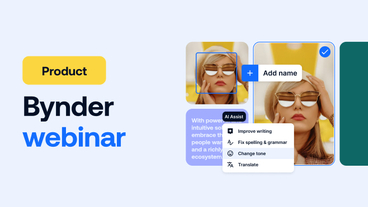
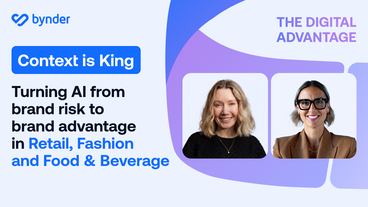
Learn how leading brands are turning brand governance into a competitive advantage
These resources explore the shifts reshaping how brands are built and protected:
Frequently Asked Questions
What is brand asset management and why is it important?
Marketing and business teams are constantly juggling new channels, faster go-to-market cycles, and the pressure to produce high-velocity content. The rise of generative AI has accelerated this challenge, enabling decentralized teams and non-creators across the business to generate content faster than ever, often without deep brand fluency.
Brand asset management software (such as Bynder) provides the infrastructure to centralize, manage, and govern your brand. By creating a single source of truth for assets, guidelines, and automated compliance, organizations ensure that decentralized content creation does not erode brand consistency or trust.
What does brand asset management do?
Five key features your brand management software should provide:
- A central repository for brand assets. The solution must be readily accessible and convenient for internal and external stakeholders to find the content they need, when they need it, ideally from one central place.
- The ability to create and manage brand guidelines. The software should let you manage and update brand guidelines, driving brand consistency and correct usage of branded assets.
- Tailored access rights and permissions. Determining and restricting who can access which brand assets is key to making sure no content falls into the wrong hands or is changed without approval.
- Scale and automate brand asset creation. Stakeholders need to take design-approved templates and customize them for a local audience without starting from scratch or using branding in an unapproved way. See Bynder's Studio.
- AI-powered brand compliance and enforcement. Advanced platforms go beyond static guidelines, using AI-powered compliance tools to check assets, evaluating logos, colors, claims, regulations, and messaging before content reaches the market.
What are three examples of brand assets?
Brand assets are key elements that shape a company's identity and foster brand recognition. Three essential examples are a logo, a color palette, and brand guidelines.
The logo acts as the visual representation of a brand, instantly recognizable and communicating its essence. The color palette comprises a carefully selected range of colors that evoke specific emotions and create a consistent visual identity across brand materials. Brand guidelines serve as a comprehensive document outlining the correct usage of the logo, colors, typography, and other visual elements.
ogether these assets create a cohesive brand identity, ensuring consistency and establishing a strong visual presence in the minds of consumers.
How do I select the best brand management software for my needs?
Brands come in all shapes and sizes, including the content they distribute. A necessary first step is to lock down your organization's specific needs and the problems you hope to solve.
Use these questions as a guide when comparing brand management system vendors:
- Why exactly am I looking for brand management software?
- What type of brand assets do I ordinarily work with?
- Who will be using the brand management software?
- Can the solution integrate with other software my company uses?
- What is my budget?
For more guidance, see our Brand Management Software Comparison Guide
How does generative AI impact brand management?
Generative AI allows organizations to produce more content faster than ever, but it also increases brand consistency risks. Historically, content creation and governance sat within the same expert team. Today, GenAI tools empower non-creative employees across regions and departments to build assets independently. Because these creators often lack brand fluency, brand governance can no longer rely on manual reviews. Modern brand management requires guardrails that validate AI-generated and decentralized content against established brand rules before it reaches the market.
How does the Brand Compliance Agent work with brand guidelines?
While dynamic digital guidelines (like Bynder's CX User Community) tell your internal teams and partners how to stay on brand, automated compliance engines (like Bynder's Brand Compliance Agent) check whether content meets those standards. The agent evaluates assets inside your DAM or upon upload against predefined, AI-ready rules, flagging incorrect logo placements, off-brand colors, unverified regulatory claims, missing disclaimers, or safety risks in real time.

Govern content across your entire regulated footprint
See how Bynder helps healthcare and life sciences organizations manage approved content, accelerate high-stakes approval cycles, and activate assets with greater control.
Engineered for data security


Let’s find the best time to explore Bynder for your team
Engineered for data security