Bynder has been recognized as a Leader in the 2026 Gartner® Magic Quadrant™ for Digital Asset Management Platforms for the third consecutive time. We believe the recognition reflects our commitment to product innovation, operational excellence, and superior customer experience. Our Digital Asset Management (DAM) platform is based on these priorities, which shape how we help the world’s biggest brands manage, govern, and activate content across teams, channels, and markets, and maximize the return on their content investment.
What is the Gartner Magic Quadrant for Digital Asset Management Platforms?
The Gartner Magic Quadrant for Digital Asset Management Platforms evaluates vendors on two criteria: Completeness of Vision and Ability to Execute. Its 2026 edition, published on October 26, 2026, groups vendors as Leaders, Challengers, Visionaries, or Niche Players.
Why was Bynder named a Leader?
We believe our recognition reflects strengths in four areas:
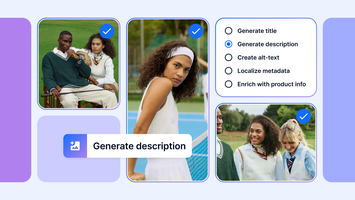
Human-led, AI Agents: Our customizable, context-aware agents orchestrate content enrichment, governance, transformation, and compliance. They work with existing taxonomy, permissions, and brand rules, helping teams handle growing content demands and get to market faster while retaining human oversight.
Native MCP interoperability: Our native Model Context Protocol (MCP) server extends Bynder DAM to compatible AI assistants such as Claude and Microsoft Copilot, and MCP-enabled applications such as Figma. It provides secure access to trusted content and brand rules while enforcing DAM permissions, digital rights, and approval status. With CX User Community, assistants can also query published brand guidelines.
Omnichannel content delivery: With our CX Omnichannel solution, brands can automatically adapt and deliver assets for digital shelves and marketplaces such as Amazon and Shopify. By optimizing content for each channel's requirements, it supports faster activation, stronger engagement, and improved conversions.
Ecosystem integrations: Our open, composable DAM embeds directly into platforms such as Salesforce, headless CMS and creative design tools through Universal Compact View, APIs, and prebuilt integrations. These connections support end-to-end, zero-download workflows from content creation to activation.
What makes Bynder different from other DAM platforms?
We build governance once and extend it everywhere. Our AI Agents work with Bynder DAM's existing taxonomy, permissions, and brand rules when enriching assets, while our native MCP server enforces DAM permissions, digital rights, and approval status when AI assistants retrieve them. Teams don't need to start from scratch with every new AI workflow. That puts DAM at the center of the content supply chain, connecting upstream creative tools with downstream delivery channels.
Easy to set up and use for lean teams, Bynder also scales to complex, multi-brand and multi-region operations.
What results do Bynder customers see?
The value of Bynder's DAM platform can be measured in three dimensions: operational efficiency through reduced duplication and rework; increased productivity through faster content discovery and activation; and financial return through lower production costs and quicker time to market.
Our Agentic Platform builds on the governed content foundation: agents enrich, adapt, and check assets against established rules to extend those returns across the content supply chain. Better metadata makes assets easier to find and reuse, reducing the need for new production and helping campaigns go live sooner.
At Specsavers, Bynder's Enrichment Agents automatically extract and apply metadata to CGI product assets before they flow into PIM and e-commerce channels. With people reviewing and approving the results, asset upload times fell by 50%, while metadata errors fell to near zero.
AI Agents give us scale without losing control. It removes repetitive work and improves consistency, allowing teams to focus on higher-value work while ensuring data quality with strong governance and human oversight.Catherine Reid
Head of Global Marketing Systems & Operations at Specsavers
Click below to read the 2026 Gartner® Magic Quadrant™ report.

Frequently asked questions
Is Bynder a Leader in the 2026 Gartner Magic Quadrant for DAM?
Yes. Gartner named Bynder a Leader in the 2026 Magic Quadrant for Digital Asset Management Platforms, published October 26, 2026. It is the third consecutive time Bynder has been recognized as a Leader.
What is an MCP server for DAM, and why does it matter?
An MCP (Model Context Protocol) server lets AI assistants like Claude and Microsoft Copilot, and MCP-enabled apps like Figma, securely connect to your digital asset management platform. Instead of working from generic or outdated content, they can search for and use approved assets and follow your brand rules directly from the DAM. That means AI-assisted work starts from trusted, on-brand content, and your DAM stays the governed source of truth as AI use spreads across teams.
What should I look for in a DAM platform to prepare for AI?
Look for a DAM that works as a governed system of record, so every asset, permission, and brand rule lives in one trusted place. Then check four things:
- Open access for AI tools. Can assistants and agents securely reach approved assets and brand rules, for example through an MCP server or API?
- Workflow automation. Can AI-powered agents handle tagging, enrichment, transformation, and compliance checks, with people staying in control?
- Channel-ready delivery. Can it adapt assets automatically for each channel and marketplace, such as Amazon or Shopify?
- Integrations. Does it connect to your CMS, CRM, creative, and eCommerce tools without download-and-upload steps?
A DAM that does all four keeps AI-generated and AI-distributed content on-brand and gives your teams one source of truth to build on.