


Most enterprise marketing teams have some form of AI in their toolkit today, whether that's a generative AI assistant for writing copy, automated tagging in their digital asset management (DAM) platform, or a rule-based workflow tool. Each of these capabilities solves a specific problem, but they have a ceiling. Each one operates within its own scope and cannot address the full complexity of managing content at enterprise scale. To fully capitalize on the benefits of AI, including agents, you need a system of record for your digital content: a strategic DAM that centralizes your assets, taxonomy, metadata, and brand rules in one place.
This is when AI agents come to play. The main difference lies in their ability to reason, adapt, and act on their own, at scale, always directed and led by humans who define the work, set the standard, and remain in control of the outcome. For enterprises managing tens of thousands of assets across global markets, it’s the difference between solving well-defined, contained tasks and tackling the complex, high-volume content challenges.
This series explores AI agents in DAM: what they are, what they can solve, how to govern them, and how to measure their impact. Here, we answer the most important question: what actually makes AI agents different from other AI capabilities, and why does it matter for your content operations?
Key takeaways
- A strategic DAM is the foundation that makes AI agents possible. Operating around the system of record of all your digital assets, AI agents can access the context of your content operations and deliver value that grows incrementally with every use case you deploy them for.
- Human-led AI agents in DAM are directed by you who decides what you want the agent to do, how to do it, and to what standard. They work with your taxonomy and metadata, and execute your content workflows, enabling intelligent enrichment, compliance, transformation, and governance that tools like ChatGPT, which lack awareness of your DAM environment, simply cannot replicate.
- A DAM platform like Bynder with built-in agentic AI brings together unlimited specialized agents, each purpose-built to handle specific tasks across your content operations. Agents such as Enrichment, Brand Compliance, Transformation, and Governance automate asset transformation and delivery at scale, with human oversight at critical points.
- Bynder’s AI Agents are purpose-built for the DAM environment and continuously optimized for the specific demands of enterprise content operations. Agents are designed from the ground up to work within your content ecosystem.
- AI agents in DAM are human-led and transform content operations by executing intelligent workflows from asset enrichment to compliance checking to content transformation. By automating this work at scale, they free marketing teams to reduce reliance on agency spend, eliminate unnecessary production costs, and reinvest budget where it drives the most impact.
What are AI agents?
Before we look at agents in the context of DAM and content operations, it helps to understand what an AI agent actually is.
At its core, an AI agent is a system that combines large language models (LLMs) with the ability to take action. Unlike a standard AI tool that generates a response and stops, an agent can receive a goal, break it down into steps, make decisions along the way, learn and adapt to context, and execute tasks. All led by humans through a natural language prompt.
An AI agent is like a digital worker that is doing the busy work for you. You give it instructions, and it’s smart enough to reason and perform actions based on those instructions.Murat Akyol
SVP Strategy at Bynder
Think of it this way: a conversational AI tool like ChatGPT answers a question (prompt). While an AI agent pursues a goal that you created and set via the prompt. That shift from responding to a single question to pursuing a defined goal is what makes agents transformative.
Agents are also context-aware. They can draw on a broad range of information, such as your asset library, your metadata, your taxonomy, the parameters you define, to make smarter decisions. Instruct an agent to write an alt-text description for an image, and it will use the brand context, asset metadata, taxonomy, along with any additional parameters you’ve defined in the prompt, to produce something accurate and on-brand. Update the prompt (say, shifting from SEO requirements to accessibility standards), and the agent adapts to the new context accordingly.
This adaptability is one of the defining differences between agents and automation. Automation is deterministic: if X, then Y. Agents are intelligent: given this goal and this context, what is the best action to take?
AI agents in DAM and content operations
The scale of content that enterprise marketing teams must create, manage, and distribute has reached a breaking point. Especially if we consider that in the last 18 months alone, Bynder customers have uploaded more than 50% of all assets ever stored on the platform, and this pace is only accelerating. Meanwhile, the demand placed on the teams managing those assets continues to grow. The result is a gap. Assets are ingested faster than they can be tagged, and compliance can't be checked manually across a library of hundreds of thousands of images.
Creative and content operations teams are increasingly stretched across high-volume adaptation work (repurposing campaigns for new markets, resizing assets for new channels, creating regional variants and so on) all of which is business-critical but difficult to deliver at the speed and scale the business requires. In this context, without a governing system of record, AI can be a liability.
AI agents in DAM are purpose-built to close that gap. They operate within your content ecosystem: reading your taxonomy, understanding your asset context, and executing workflows that previously required a long time. They are human-led, which means the human defines the work upfront, applies their judgment to set the parameters, and leads the agents to execute it.
Some concrete examples of what agents can do in a DAM context (available in the Bynder platform) include:
- Apply the Enrichment Agent to go far beyond basic metadata tagging, extracting contextual information from your assets and mapping it directly to your business’s unique taxonomy, metadata requirements, and brand structure, at a scale and depth no manual process could match.
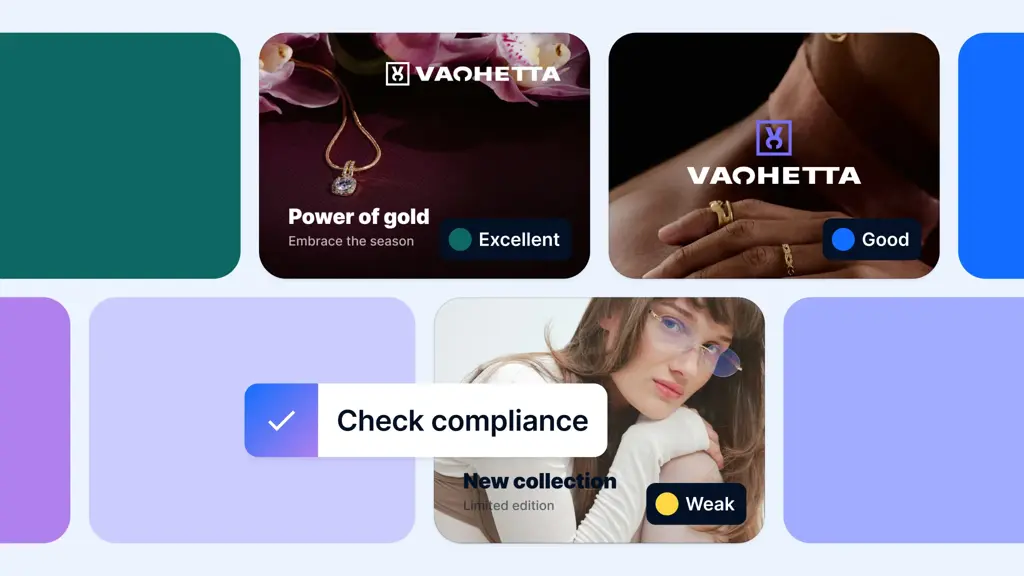
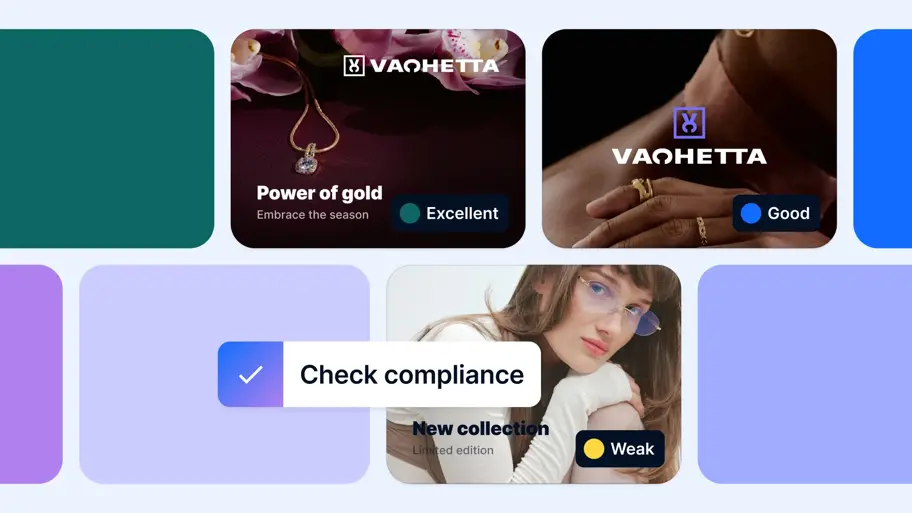
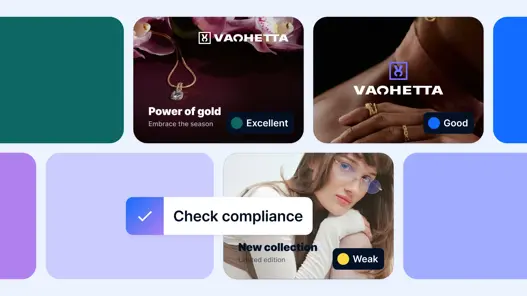
- Check assets against brand guidelines and compliance policies at upload or on demand, flagging issues before they reach distribution.
- Transform and adapt images for different channels, formats, and markets without touching the core brand asset.
- Monitor where assets are being used externally, for example, on partner sites, retailer pages, and media channels, to track compliance and brand consistency.
Unlike agents built outside the DAM and connected to the martech stack via an integration, Bynder’s AI Agents are built specifically for and as part of the DAM platform itself. This means they work natively with your taxonomy, your metadata mapping, your approval workflows, and your brand rules. That specificity is what makes them accurate and trustworthy at scale, even while they execute on goals autonomously.
This is also what distinguishes DAM-native agents from general-purpose tools like ChatGPT. Those tools can be powerful for standalone tasks, but they lack awareness of your asset library, brand standards, metadata structure, and distribution workflows. An agent operating inside your DAM accesses this context natively and uses it to deliver outputs that are faster, more accurate, and relevant to your specific business.
AI agents vs. AI tools: what’s the real difference?
The term “AI” covers a wide spectrum of technology and it’s easy for the distinctions to blur. Here’s how AI agents differ from the other AI capabilities you’re likely already using.
AI capabilities (fixed-purpose AI within a platform)
Most DAM platforms today include AI capabilities that deliver genuine value: Bynder’s own AI Search, for example, is the most complete AI search capability in the market, adopted by over 1300 customers and driving significant content reuse and ROI. These capabilities are purpose-built to solve specific, well-defined problems. Where AI agents can handle more complex, multi-step, highly specific content challenges that require deeper configuration and deeper awareness of the DAM.
Automation (rules-based workflows)
Workflow automation is deterministic, meaning it works like this: if a file is a JPEG under 2MB, route it to channel X. Rules-based automation is predictable and scalable, but it cannot handle ambiguity, so every scenario must be manually scripted. As your content operations grow in complexity, the volume of rules required becomes unmanageable to account for every relevant circumstance.
AI agents (configurable, context-aware, adaptive)
AI agents don’t require every scenario to be pre-scripted. You define the goal and the exact nature of the work you want performed. For example: scan my entire asset library, identify any image where alcohol is being consumed near minors, flag it for review, and update the usage rights accordingly. The agent executes that instruction with precision at scale and reasons about how to achieve it based on the available context.
Here is a summary of the key differences:
- Fixed AI capabilities: AI capabilities in DAM already deliver real value for defined, repeatable tasks. AI agents build on that, adding the ability to handle complex, multi-step, highly specific workflows that go beyond what any single AI feature can address.
- Rules-based automation: Deterministic, manually scripted, brittle at scale. Cannot adapt to nuance or ambiguity.
- General AI tools (e.g. ChatGPT): Powerful but context-blind unless manually inputted. No awareness of your brand, taxonomy, or workflows.
- AI agents in DAM: Configurable, context-aware, adaptive. Purpose-built for your specific business, brand, and content operations. Unlimited custom agents, human led.
The fundamental shift with agents is from conversational AI tools like ChatGPT that require every rule and possibility to be mapped out in advance, to tools that can intelligently navigate towards a goal based on the context available. This is defining a new category.
From individual agents to an Agentic AI platform
The technology behind a single AI agent is already powerful. But the real next-level transformation happens when an organization deploys multiple agents across their content operations, each handling a specific workflow within a unified platform. This is what’s considered an agentic AI platform: the orchestration of agents.
Agentic AI refers to an artificial intelligence system that can pursue high-level goals, turning your DAM into an engine that accelerates business value. It consists of AI Agents – human-led and purpose-built for the DAM environment, designed to handle the specific complexity of content operations: from classifying assets against your taxonomy, to checking brand compliance across a library of hundreds of thousands of images, to transforming content for every channel and market your business operates in. In a multi-agent system, each agent performs a specific subtask required to reach the goal, and their efforts are coordinated through AI orchestration.
In practice, Bynder’s DAM platform provides the foundation: security, permission, governance, global instruction rules, and approval controls that ensure every agent operates within the boundaries your organization defines. On top of that, every agent executes specific content tasks each led by humans who set them up and own the outcomes: An asset is uploaded; an enrichment agent automatically classifies and tags it based on your taxonomy; a compliance agent checks it against brand guidelines and regulatory requirements; if issues are flagged, a human is looped in to review and regulate; once approved, a transformation agent adapts the asset for the required channels and markets; a governance agent monitors its use externally to ensure ongoing brand integrity.
At every stage, a human leads. You define the work, set the parameters, and determine when and how each agent operates.
Bynder’s Agentic AI platform is built on this principle: human-led, AI-powered. Customers can create and configure an unlimited number of agents, each tailored to specific business needs, brand rules, and operational contexts. An AI Control Center provides centralized oversight, allowing admins to set global rules, manage permissions, define who can initiate agents and how, and ensure a human remains in the loop where it matters most.
Bynder includes five specialised agent types: the Enrichment Agent (metadata and classification at scale), the Brand Compliance Agent (brand and regulatory standards), the Transformation Agent (asset adaptation and repurposing), the Governance Agent (external asset monitoring), and Automation Workflows (cross-system workflow orchestration). Within each, organizations can build any number of custom agents, each one configured with specific instructions, guardrails, and contextual parameters for their exact use case.
This is not a one-size-fits-all AI layer bolted onto a DAM. It’s an extensible platform that grows with your business, continuously updated with the latest AI models, and purpose-optimised for the realities of enterprise content operations.
New opportunities and business value unlocked by AI agents
Here are some concrete opportunities AI Agents in DAM open up and the value they deliver, helping you build your business case.
Content capacity without headcount growth
One Bynder customer configured a single custom agent that saved the equivalent of one employee working full-time for 177 working days, approximately $40k in annual marketing spend. Across a portfolio of agents handling enrichment, transformation, and compliance, the productivity gains compound significantly.
Faster time-to-market across channels
The Transformation Agent enables teams to take a hero asset and automatically generate variants for every channel, format, and regional requirement without going back to the agency or commissioning a new shoot. For a retailer distributing to 20+ marketplaces, each with different spec requirements, this eliminates the bottleneck of manual adaptation and the downstream cost of rejected submissions.
Brand and regulatory compliance at scale
As AI-generated content proliferates, the risk of off-brand or non-compliant assets reaching the market grows exponentially. Manual compliance checking at scale is impossible. The Brand Compliance Agent can scan an entire asset library against brand guidelines, regulatory requirements, and custom rules, flagging issues before they become brand or legal risks. For organisations in regulated industries, this is a governance imperative.
Hyper-personalization made operationally feasible
Personalization at scale has long been a strategic ambition constrained by operational reality. Agents change that equation. By enriching assets with richer, more granular metadata agents make it possible to serve genuinely personalized content experiences across markets, audiences, and channels, without the content operations team becoming the bottleneck.
Use cases you haven’t yet imagined
Use cases can get as specific as your business needs. Using natural language prompts, you can build and configure agents for virtually any content challenge, then save them to your agent library to run repeatedly, refine over time, and scale across your organization. Customers are already building agents:
- To detect whether alcohol containers are open or closed in product imagery.
- To identify whether a contracted model’s likeness has been used beyond the agreed licence period.
- To automatically classify thousands of SKU variants by product type, packaging format, and volume.
These are tasks that were previously too specific, too granular, or too labour-intensive to automate. Now, with custom agents running in the background, this becomes possible within hours and at scale.
The ROI of agentic AI
AI features, automation rules, and general-purpose AI tools have each moved the needle on content operations. But as content operations grow in scale and complexity, the challenges they face outpace what any single AI capability, however powerful, is designed to handle alone. They can help you do what you’re already doing, faster. What they can’t do is fundamentally transform how you operate.
AI agents, instead, are configurable, context-aware, and built to act. They work within the structure of your DAM, are aware of your taxonomy, brand rules, and workflows, and scale in ways that human teams simply cannot. These digital teammates augment your workforce, taking on the volume, repetition, and complexity that were previously impossible to manage, so your teams can focus on the work that actually requires human creativity and judgment.
Bynder’s Agentic AI platform brings this capability to your content operations today. It offers five specialized agent types, unlimited custom agent creation, an AI Control Center for human oversight, all built natively into your existing DAM taxonomy and workflows. The result is the most advanced agentic AI solution purpose-built for enterprise content, already delivering measurable outcomes for customers across industries.
Ready to see AI agents in action?
Explore Bynder’s AI Agents platform and discover how leading enterprises are transforming their content operations. Visit the AI Agents product page and book a demo.