Great creative output starts with a brilliant brief....The DMA
In most organizations, creative briefs can live as isolated documents; buried in inboxes, local folders, or shared drives, and quickly lose relevance once content production starts. But what they really should be doing is setting your content up to deliver brand-approved messages and engaging experiences at scale.
A weak creative brief can create messaging misalignment, off-brand content, and a high likelihood of rework. But a strong creative brief not only defines a campaign; it creates a shared foundation that keeps teams aligned, from ideation through to execution.
Furthermore, the alignment is taken a step further when the creative briefs are connected by a system of record for digital content.
In this blog, we’ll cover:
- What a creative brief actually is
- What a high-performing brief should include (copy-and-paste template)
- Some real creative brief examples
- How you can connect briefs to your enterprise’s wider content ecosystem
What is a creative brief?
A creative brief is a structured document that defines the objective, audience, message, and deliverables for a campaign or a piece of content. Traditionally, briefs serve as a strong indication of content direction to present to stakeholders at a planning stage, and an effective guide for your creatives to use, but as enterprise content demands grow, today’s creative brief must also support:
- Faster execution across channels
- Consistent brand governance
- Reuse of existing content and assets
- Clear alignment between strategy and output
It means that a creative brief has evolved from being just a document to a solid starting point for how the content you need is created, managed, governed, and activated across your organization.
Understanding “what good looks like” and where the process can typically fall down is key to improving how your teams develop, complete, and, ultimately, execute against a creative brief.
How to write a creative brief
A strong creative brief should be clear, focused, and actionable.
Here’s what you need to include if you’re looking to build one that your teams can actually execute against:
- Campaign/content overview: What is this campaign or asset about?
- Objective: What strategic goal or business outcome are you trying to achieve?
- Target audience: Who are you speaking to, and what matters to them?
- Key messages and call-to-action: What are the most important takeaways? And what action do you want the audience to take next?
- Deliverables: What content needs to be created and in what formats?
- Channels: Where will this content appear?
- Brand guidelines, background documents, and resources: Which existing materials should be used and referred to?
- Content workflow and stakeholders: Who needs to contribute, review, and approve?
- Timelines: What are the key milestones, and what’s the deadline?
- Success metrics: What does success look like, and how will it be measured?
Tip: Storing your creative briefs alongside approved assets in a system of record for digital content like Bynder DAM ensures your teams are always working from the latest version and approved guidance. This enhances governance levels, reduces the risk of duplication, and accelerates content time-to-market.
Why do most creative briefs fail?
Even the most well-written creative briefs can fail if they’re not properly executed on; and it’s usually when they are not embedded into your enterprise’s content operations.
Creative briefs that are stored “in silos” can lead to other teams relying on outdated versions, while providing too much information and not enough clarity in the briefs can cause teams to feel overwhelmed and directionless, with any subsequent work more likely to fall short.
Whatever the case, a weak creative brief results in long lead times, publishing delays, inconsistent output, and wasted creative effort.
5 Examples of completed creative briefs
Below, you’ll find some creative brief examples from leading brands and organizations that demonstrate how creative briefs are used in practice across different industries and levels of complexity.
It’s important to note that in modern content operations, the most effective briefs are those embedded within content workflows, rather than existing as static documents. In this way, they can act as structured inputs that guide execution.
Example 1: Coca-Cola
Coca-Cola’s creative brief focuses on shaping perceptions, defining audiences, the emotional positioning, and the campaign intent. It goes beyond the “deliverables” aspect to align its teams around how the brand should be “experienced.”
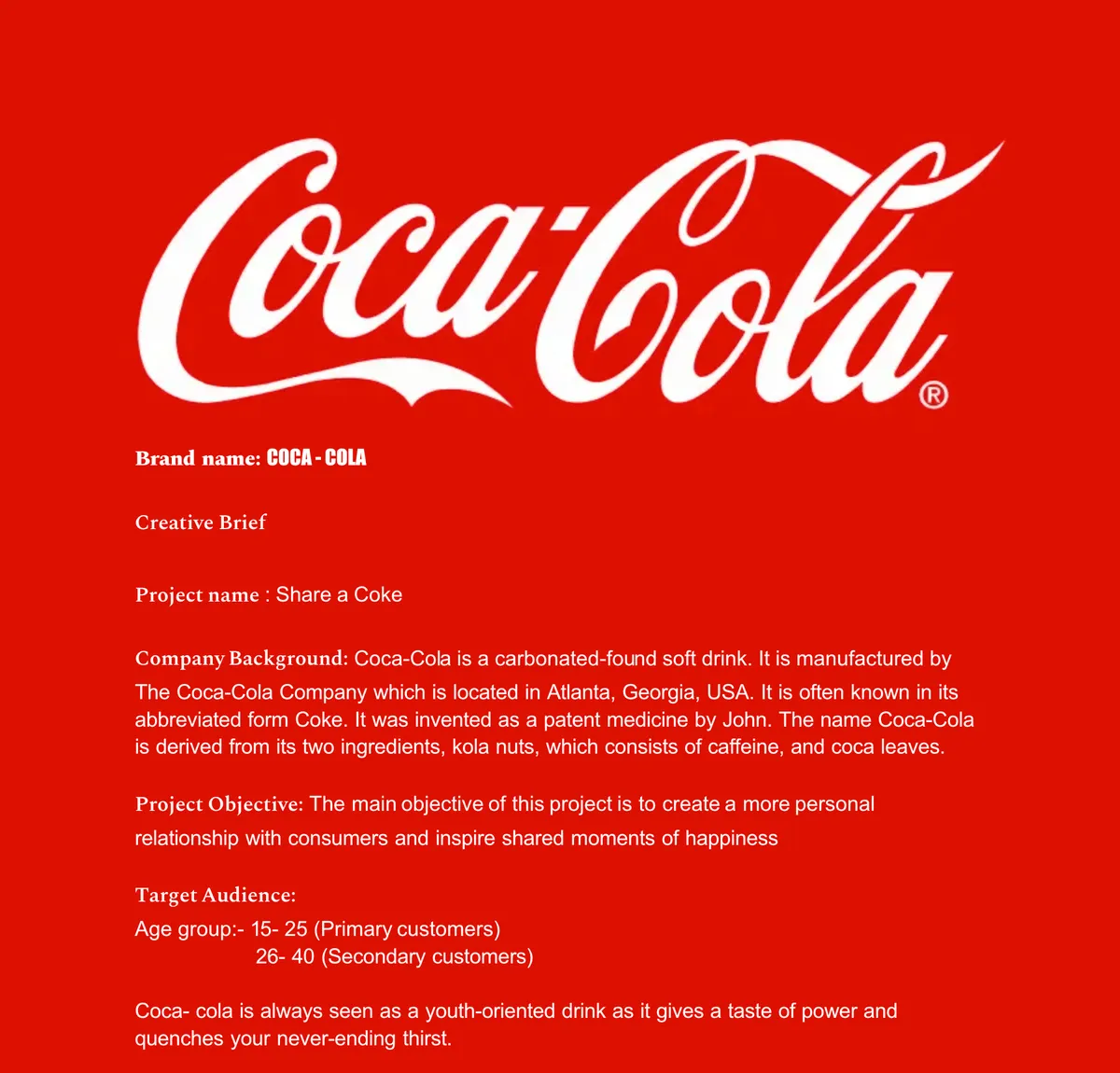 Snippet of a creative brief for Coca-Cola
Example 2: PayPal
This creative brief example from Paypal centers on insight and positioning, so that teams fully-align on messaging before any actual content work begins. It also appears to prioritize clarifying the objective and target audience over production details.
 PayPal creative brief example
Example 3: Mailchimp
Mailchimp’s approach to creative briefs highlights how they should distill a campaign down to a clear, focused idea. This helps teams to spark better ideas from the outset, and keeps teams firmly on the right path for execution.
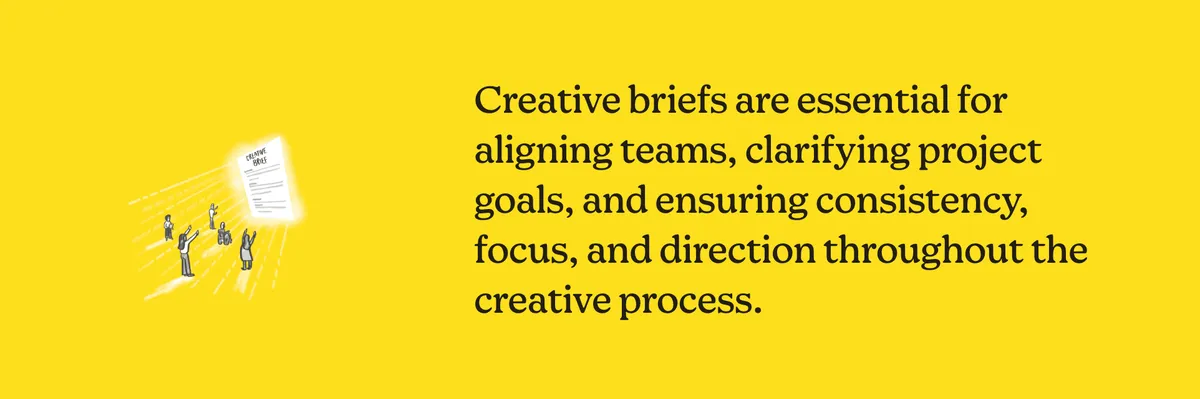 Mailchimp's approach to a creative brief
Example 4: Zapier
This Zapier blog includes a comprehensive but straightforward creative brief template. It demonstrates how even ‘lightweight’ briefs can provide enough structure to guide execution and activation, without slowing teams down.
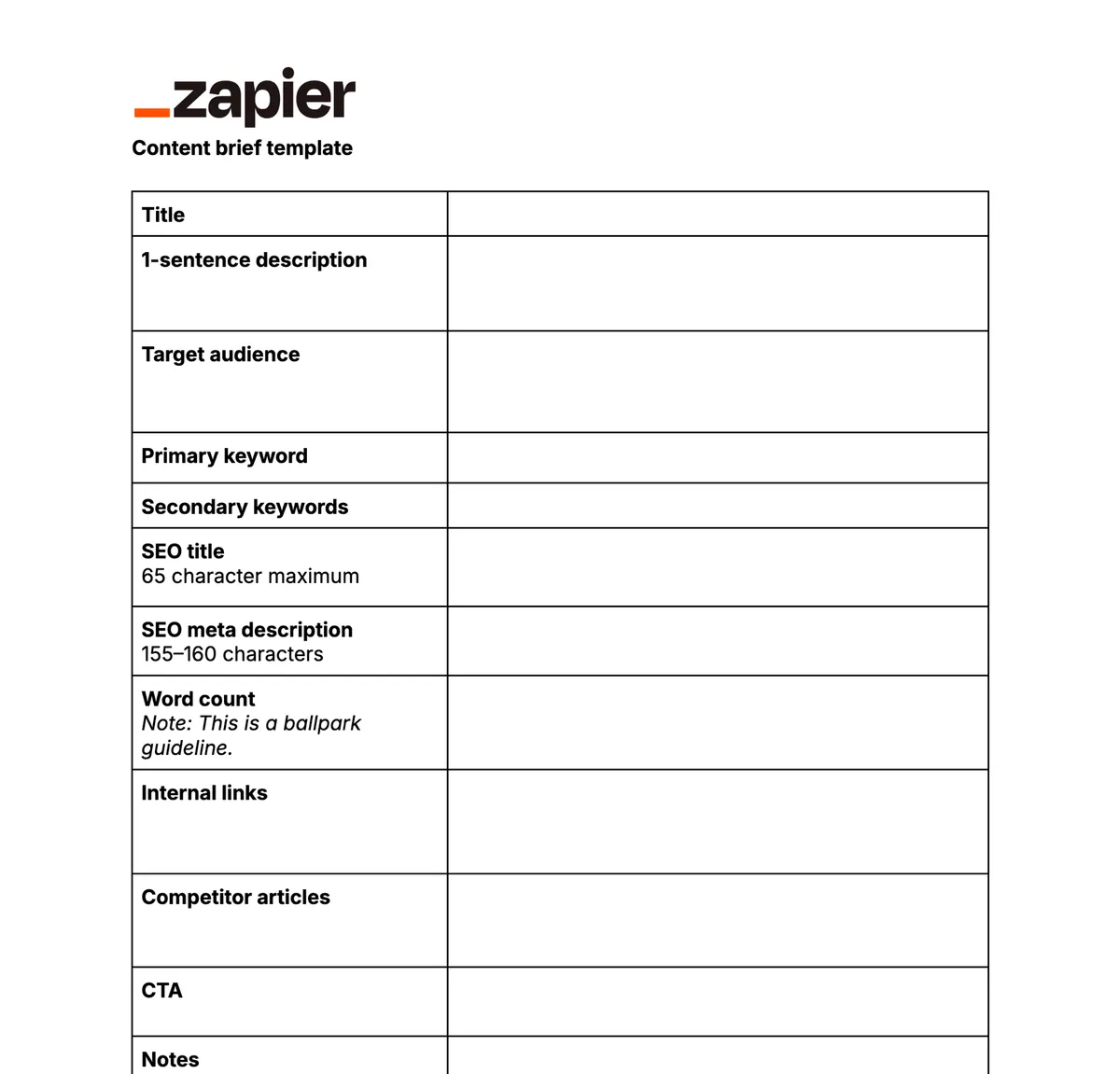 Zapier creative brief template
Example 5: Bynder
Bynder’s Content Workflow capabilities demonstrate how creative briefs become far more effective when they’re embedded directly into enterprise content operations, rather than treated as standalone documents.
Instead of existing separately from execution, briefs can sit within governed workflows that connect stakeholders, approvals, assets, deadlines, and production stages in one centralized environment.
This approach gives creative, marketing, and brand teams greater visibility into how work progresses from briefing through to activation.
It also helps reduce bottlenecks, improve governance, and ensure teams are always working from the latest approved content, assets, and guidance across campaigns and channels.
Connecting your creative briefs to execution with DAM
A creative brief only delivers value if it is connected to the execution process. That means teams need access not just to a strong brief, but to the right assets, brand guidelines, and context so that they understand how content should be used for different markets, audiences, and channels.
Solutions like Bynder DAM and CX for User Community enable teams to activate content more effectively. By creating curated, context-relevant content hubs, enterprises can deliver the right content to teams, partners, and customers, while ensuring that each campaign is executed consistently and at speed.
Instead of working in silos, your brand, marketing, creative teams, partners, and agencies can access everything they need in one place, with DAM acting as the system of record for all digital content.
From briefs to business outcomes
As content demands for your enterprise continue to grow, the way your creative briefs are developed and implemented needs to evolve.
While AI is accelerating content creation, using strong creative briefs alongside governed workflows ensure that your content remains accurate, on-brand, and ready for activation.
To truly scale, briefs need to be more than static documents; they need to be connected to the systems, assets, and teams that bring content to life for your enterprise.
That’s where Bynder comes in. Bynder DAM acts as a system of record for digital content, connecting creative briefs, approved assets, workflows, and distribution in one centralized platform. Whether you’re activating campaigns across regions, working on content with multiple teams and partners, or delivering content to multiple channels, Bynder helps ensure every piece of content starts with clarity and ends with impact.
Book a demo with one of our in-house experts, and discover how Bynder helps enterprise teams turn creative briefs into measurable business outcomes.
FAQs: Creative briefs
What makes a good creative brief?
What should a creative brief include?
How long should a creative brief be?
Who should be involved in putting together a creative brief?
Why do creative briefs fail?