Enterprise digital asset management (DAM) migration has become a strategic, high-stakes initiative. It’s no longer just a ‘content transfer’ project, but an exercise that affects governance, compliance, global workflows, downstream systems, and the overall performance of your content supply chain.
When enterprises need to scale and expand into new markets and regions, their digital channels quickly diversify and content volumes grow exponentially. It’s for that reason that a scalable, enterprise-grade system of record becomes essential for controlling and managing that complexity.
The migration challenge facing modern, content-led enterprises
Enterprises choose to migrate their digital assets for a number of reasons. It might be triggered by the need to:
- Consolidate multiple systems due to organic growth
- Replace an outdated, underperforming DAM system
- Centralize content across regions or business units
- Standardize content operations due to a merger or an acquisition.
Whatever is behind the requirement for DAM migration, the process of transferring enterprise-scale content is complex.
Migrating hundreds of thousands, or even millions of assets means that your enterprise needs to navigate potential challenges such as:
- Moving high volumes of data across systems
- Inconsistent or outdated metadata
- Differences in taxonomy between departments, brands, or regions
- Unclear ownership of duplicate or archived assets
- Rebuilding or re-mapping rights and permissions
For large enterprises, these challenges can soon impact DAM migration project timelines, resourcing, and the ability to maintain business continuity.
That’s why enterprise DAM migration has become a board-level priority, such is the importance of adopting an approach that is fully considered, phased, and well-governed. It ensures that, from day one, the new DAM can support the organization's scale, structure, and operational needs.
What is a DAM migration? And why does it matter for your enterprise’s tech stack?
A DAM migration is the controlled, systematic transfer of digital assets, metadata, rights information, permissions, and workflow structures from one environment into a new, unified system of record.
Unlike a simple file move, DAM migration requires precision. For example, all metadata must remain intact and taxonomies must map correctly to ensure that the assets are fully searchable and usable.
For an enterprise, DAM migration stands to impact its entire digital ecosystem. That could include CMS, PIM, CRM, any marketing automation or creative tools, any commerce systems, and analytics software. A poorly executed DAM migration can compromise every downstream experience.
What stood out for us with Bynder were the interfaces to partners and networks, which were available right out of the box. The foundation we’re creating now can be easily adapted and expanded as we grow.Hadi Hajdarevic
Project Manager of Digital Projects at Karlsberg
What does an enterprise DAM migration typically include?
An enterprise DAM migration project includes the following three foundational phases, all of which help organizations reduce risk, align their stakeholders, and maintain business continuity while they work towards modernizing their content operations.
Handled correctly, this process lays a strong foundation for better team productivity, stronger brand governance, and more measurable ROI across all marketing operations.
Step 1: Conduct a comprehensive asset audit
Your first step is to review the entirety of your existing assets across all brands, teams, and regions, and to decide which should be moved first, which can be moved later, and which should be archived or deleted.
A well-executed asset audit usually delivers:
- A prioritized roadmap for asset migration
- A clear list of evergreen assets
- A list of duplicate assets and outdated content
- Some insight into how different teams use assets
- Confirmation that the assets to be migrated meet the necessary compliance standards.
Step 2: Clean up and define your metadata and taxonomy architecture
An enterprise DAM migration is the ideal time to redefine your metadata schema so that it supports not only your current workflows, but the future needs of your content-driven enterprise.
Metadata and taxonomy form the ‘backbone’ of a modern, enterprise-grade DAM. But without a strong foundation, even the most advanced system will struggle to deliver the accuracy, speed, or governance needed at scale.
For most enterprises, this phase is best completed with some support from an external DAM specialist, but Bynder customers can benefit from the expertise of our in-house Onboarding Team. They work closely with the customer to help map metadata, refine taxonomy structures, and ensure that all assets can be transferred cleanly and consistently.
With the right work done ahead of the migration, your DAM will be able to fully support:
- Fast and precise asset retrieval through AI-powered search
- Localized and region-specific content
- Personalized and channel-ready content for omnichannel delivery
- Complex product and brand hierarchies across multiple business units
- Critical governance data, like usage rights, expirations, and lifecycle information.
Related: 5 tips for preparing your digital assets for ingest
Step 3: Choose the right migration approach for your enterprise and build out your change management plan
Selecting the right migration approach is key if your enterprise wants to maintain its data integrity, ensure business continuity, and effectively prepare for scalable content operations.
While most enterprise DAM migrations blend automated ingestion, API-based imports, and guided manual corrections, the exact approach you choose will depend on your new enterprise DAM’s:
- Architectural requirements
- Asset volume
- Integrations
- Security requirements.
A successful DAM migration project relies not only on the technical aspect but also on the careful coordination of people, processes, and governance.
This typically includes appointing a dedicated DAM manager, a technical lead, and some internal ‘DAM champions’ who can help embed new practices within teams and departments.
A good migration plan should include:
- A role-based governance model for the project
- A structured communication and onboarding program
- A phased roll-out strategy
- A validation and quality assurance plan
- A long-term adoption and optimization plan.
Taking this approach reflects the fact that your enterprise isn’t just moving assets, but laying the foundation for a modern system of record that enables governance, compliance, and scalable content activation across your entire martech ecosystem.
Related: Discover how Bouclair successfully migrated 85,000 assets to Bynder DAM in only two weeks.
Building your post-migration operating model
Once all of your enterprise’s digital assets are migrated, the DAM becomes the operational engine that drives your content supply chain.
Having a solid post-migration operating model in place is now essential for ensuring that the data held within your DAM remains accurate and compliant, and that the system itself continues to be widely adopted over the long term.
A post-migration operating model should include:
- Defined governance roles and review cycles
- Regular metadata audits
- Clear archiving, expiration, and versioning processes
- Onboarding and training for new employees
- Periodical analysis of DAM usage and asset performance
- Ongoing improvement and evaluation of taxonomy, permissions, and workflows.
Common enterprise DAM migration pitfalls, and how to avoid them
Many things can cause the failure of a DAM migration project in a large organization. The following are the most common pitfalls to avoid:
- Migrating assets when there’s no governance in place
Prevent this by defining a role-based governance model before any files move across. - Forgetting to factor in rights and compliance-related workflows
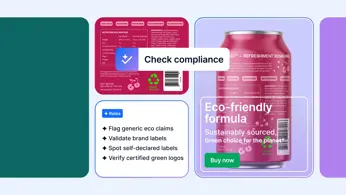
Prevent this by centralizing rights data early and validating it during the metadata mapping process. - Underestimating the task of cleaning up metadata
Prevent this by defining and establishing a unified enterprise schema before migration begins, and clean metadata in batches. - Overlooking the possible impact on integrations
Prevent this by auditing your upstream and downstream systems and update mappings ahead of migration. - Failing to prepare your teams for new processes
Prevent this by deploying a structured roll-out plan that sets out responsibilities and training requirements clearly.
Migrating all of your assets in one go, instead of in phases
Prevent this by prioritizing the migration of high-value assets first, before rolling out the remainder of the migration in controlled stages.
The future of your DAM within the enterprise digital ecosystem
The days of an enterprise DAM being a standalone content library are long since over. In fact, a modern DAM like Bynder is the AI-powered DAM system of record that can feed every customer experience, and support every marketing channel.
Using Bynder as a system of record for all digital content allows your teams to take advantage of its game-changing capabilities, including:
- AI-powered search, such as Face Recognition, Text-in-Image, Similarity Search, and Natural Language Search, to dramatically improve asset findability and reduce time wastage across global teams.
- AI Agents that enrich metadata automatically, transform and optimize assets for any channel, and protect your brand through detecting outdated and unauthorized content across the web.
- Connected content activation through CX User Communities and CX Omnichannel, ensuring the right, fully contextualized assets reach the right teams and channels with consistency and speed.
- Access to 145+ pre-built integrations that connect smoothly with your enterprise stack; whether it’s CMS, PIM, CRM, marketing automation, creative, or productivity tools.
Bynder Analytics, which provides your enterprise with essential insight, from asset usage to performance. This allows your teams to make data-backed decisions about future content investment and asset lifecycles.
We chose Bynder as a partner because we felt the original onboarding team and the team that helped us to get off the ground were really listening to us and to exactly what we wanted as an organization.Adrian O’Meara
Global Product Manager at Twinings
Speak to Bynder about starting your enterprise DAM migration journey
Choosing Bynder reduces the migration risk for your enterprise, accelerates the activation of high-value assets, and delivers brand consistency at scale.
With a robust system of record, powerful AI capabilities, smooth integrations, and excellent customer onboarding and best-practice guidance, Bynder gives enterprises the structure and support they need to execute a successful DAM migration, no matter how complex their digital ecosystem is.
If you’re planning an enterprise DAM migration, speak to our in-house experts about how you can start planning for a well-executed, effective DAM programme.