



Brand compliance is all about making sure every piece of content, from social media posts to website content, consistently reflects an organization’s identity, voice, and values. In today’s digital age, where companies are managing global teams spread across regions, content is created faster than ever, and customer touchpoints are endless, meaning staying on brand is both more important and challenging.
To manage brand compliance, organizations rely on different solutions, with a digital asset management (DAM) system standing out as one of the most effective. A DAM not only serves as a system of record that centralizes creative assets but also gives teams the tools they need to ensure brand standards are followed every time content is shared or repurposed.
In this blog, we explore the importance of brand compliance and how a DAM solution can provide a positive business impact, from faster workflows and better collaboration to stronger brand identity and mitigated business risks.
Key takeaways
- Brand compliance ensures all content consistently reflects an organization’s identity, voice, and vision across all touchpoints, such as website, social media, email, and sales.
- Non-compliance can result in reputational and operational risks that can impact both brand integrity and your bottom line due to a loss of customer trust that can cause a decline in market value through lost sales and long-term damage to brand equity.
- DAM solutions like Bynder enforce brand compliance through centralized access, version control, role-based permissions, and AI agents with governance capabilities. Capabilities like scalable brand guidelines, designer-approved templates, and integrations with creative tools ensure consistent, on-brand content at every stage.
What is brand compliance?
Brand compliance is the practice of ensuring all brand communications and assets follow established brand guidelines, also referred to as brand books, brand guides, or style guides, across all channels, such as digital, print, and in-person experiences. These brand guidelines cover elements like logos, colors, typography, tone of voice, and imagery, as well as how products are presented, how customer communication is written, and even how employees represent the brand.
The goal is brand consistency, where every touchpoint, whether it’s a social media post, email, sales pitch, or website, looks and feels the same to reinforce brand recognition and trust. Without brand compliance, organizations risk confusing their audience, which can dilute their identity and even damage their reputation.
The cost of non-compliance
When a brand shows up consistently, it builds recognition and trust. But when standards are overlooked or ignored, those costs can be high. Non-compliance can create reputational and operational risks that can weaken a company’s standing in the market:
- Reputational risks: If messaging, visuals, or tone are inconsistent, it can erode trust and confuse your audience. Over time, this can damage credibility and make it harder for customers to recognize or remain loyal to your brand.
- Operational risks: When teams don’t follow brand guidelines or have access to the right assets, it leads to inefficiencies, such as wasted time recreating materials, fixing mistakes, or seeking approvals. These bottlenecks can slow down workflows, drive up costs, and reduce productivity. Lack of compliance can also make collaboration across departments difficult, creating silos and delays that impact business performance.
Who’s responsible for brand compliance?
Maintaining brand compliance is a shared responsibility across an organization. Marketing and design teams are often on the front lines, creating campaigns and visuals that need to reflect brand standards. Sales teams rely on these assets in their presentations and pitches, making it essential that they use materials that are accurate and up-to-date. Even external partners and agencies play a role, as they often extend the brand’s presence into new markets and channels.
The challenge comes when teams are decentralized or working across global operations, where content is created and distributed in different regions. This can make it easy for outdated logos, off-brand messaging, or inconsistent visuals to slip through.
To prevent these issues, organizations need scalable solutions and clear brand and content governance with defined processes and the right technology that enable everyone to be aligned. This is where digital asset management becomes a powerful solution for ensuring brand compliance across the board.
Key DAM features that enforce brand compliance
A DAM platform like Bynder sits at the heart of your martech stack, serving as a system of record for all of your brand’s digital assets. There are several DAM features to improve your workflow and enforce brand compliance to ensure only the latest approved assets make it to market.
Scalable brand guidelines
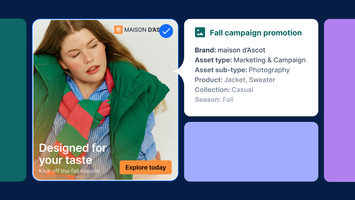
Centralized brand rules and style guides ensure everyone has access to the most current standards. Bynder’s CX for User Community solution, an integral part of the DAM platform, equips those in your go-to-market team, such as campaign managers, brand managers, and functional managers, with dynamic brand guidelines that put context around your brand’s content. For example, your brand can house all versions of its logo, such as colored, black and white, transparent, and anniversary edition, and supply users with clear standards and instructions on which logo to use and when to ensure compliance.
Oatly, a Swedish food company producing dairy product alternatives, uses Bynder’s custom toolkits and brand guidelines in CX User Community to enable go-to-market teams to turn local content into global campaigns. Oatly saw a 42% increase in asset views, with asset searches rising by 107% and 23% fewer assets are going unused. By using Bynder as a strategic driver of content operations, Oatly can ensure brand consistency at every stage of the content lifecycle.
Role-based permissions
Bynder’s role-based permissions and user access controls in solutions like Studio, CX User Community, and Content Workflow ensure administrators can define who can view, edit, download, or share specific assets or collections. As a result, brands can reduce the risk of mistakes or misuse to maintain brand integrity and compliance. For example, a designer may have the ability to upload and edit creative files, whereas a sales representative might only be able to download pre-approved assets for client presentations. This level of control minimizes the risk of off-brand or outdated content from being used in public-facing channels while also reducing errors that can happen when too many people have access to unrestricted content.
Integration with creative tools
By using a DAM that connects directly with other tools in your martech stack, such as PIM, CRM, or design tools like Adobe Creative Cloud, teams can access approved assets and guidelines without leaving their workflow. Bynder has the largest integrations marketplace for APIs and SKDs, allowing teams to create a connected ecosystem with their DAM sitting at the heart of their martech stack, reducing frictions that often lead to off-brand workarounds. Instead of saving files locally, reusing old content, or recreating assets from scratch, teams can work faster and stay confident that every deliverable aligns with brand standards.
Templates and locked elements for on-brand content creation
Bynder Studio features designer-approved templates with locked logos, fonts, and colors that help users create on-brand content while still allowing flexibility where it’s needed. This also allows teams to speed up content creation for any format or channel, with real-time collaboration that offers visibility on every change to ensure compliance at scale.
Alerts for unauthorized use or expired assets
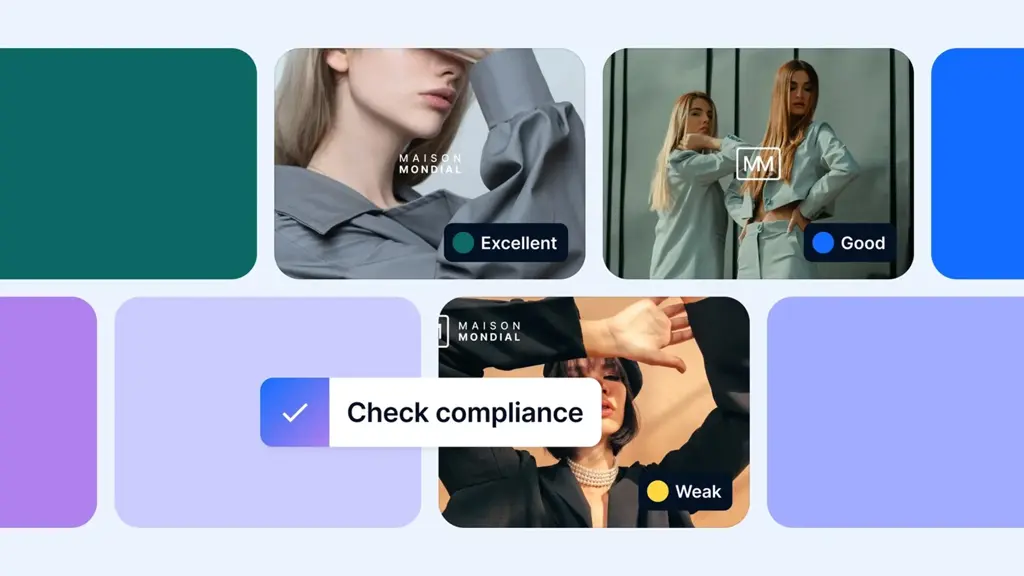
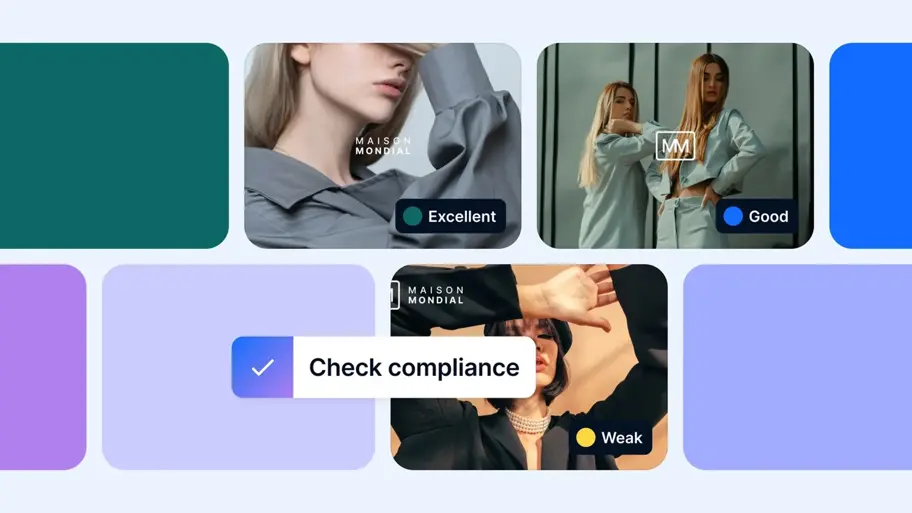
Bynder’s AI-powered DAM now features agentic AI, where teams can configure context-aware AI agents to perform a wide range of tasks. AI content moderation is one of these tasks, where Bynder’s AI agents can be customized to scan the public web to detect where and how your digital assets are being used, unlocking limitless governance use cases such as helping to enforce assets’ usage rights, track expired or outdated content, and reduce brand or legal risks.
Along with AI agents, Bynder offers AI-powered Search capabilities, including Face Recognition, Similarity Search, Natural Language Search (NLS), Speech-to-Text, Text-to-Speech, Search by Image, and Text-in-Image Search, to ensure content governance and brand compliance across all platforms. With easier search capabilities, teams can easily discover approved assets to ensure only compliant content makes it to market. Campari Group uses Bynder’s AI-powered Search capabilities to ensure regulatory compliance on all published content, getting content to market faster while adhering to brand guidelines at every step.
Workflow automation
DAM helps improve the asset approval process by creating automated workflows, allowing assets to be routed to the appropriate stakeholders for review and approval, ensuring all necessary checks are performed before content is published. These built-in approval processes and review steps keep projects moving while ensuring brand standards are upheld at every stage.
Bynder’s Asset Workflow makes it easy to brief, review, and approve digital assets in one place with clear, customizable briefs and the ability to assign ownership and track asset status. Configurable workflows, in-context collaboration, and version control also keep campaigns moving with shortened approval rounds. The ROI of DAM Guide found that 94% of clients create assets faster with Bynder, showcasing how Bynder’s solutions give organizations both control and flexibility to scale creative work without compromising brand integrity.
Download the The ROI of DAM guide
Ensuring brand compliance at every stage of the content lifecycle
Brand compliance is a set of rules that creates a foundation for how customers recognize, trust, and engage with a business. The risks of falling short, from reputational damage to operational inefficiencies, highlight why consistent branding matters at every stage of the content lifecycle. With multiple teams, markets, and partners involved, keeping everyone aligned can be challenging without the right structure in place.
That’s where Bynder’s digital asset management platform proves its value. Bynder’s AI-powered DAM centralizes assets, enforces brand standards through permissions and workflows, and equips teams with solutions like AI agents that can moderate content across the web to spot non-compliance. The result is stronger brand integrity, faster collaboration, and the confidence that every touchpoint reflects your brand at its best.