Brand management: what it is, how it works, and why it matters
Author: Ashley MusselmanBrand management is the strategic discipline of building, measuring, and protecting a brand's value over time. It governs how a brand is positioned in the market, how it's experienced by customers, and how its equity grows, or erodes with every interaction.
It's bigger than guidelines. Guidelines tell teams how to apply the brand. Brand management determines what the brand stands for, how it performs against competitors, what it's worth commercially, and what needs to evolve as the market changes. When done well, it turns a company's brand into an asset with measurable financial value.
Below is everything you need to understand how brand management works, what it involves, and how to do it effectively at scale.
Key takeaways
- Brand management is the disciplined, ongoing practice of shaping how a brand looks, sounds, and is perceived, not a one-time launch exercise.
- It encompasses brand strategy, visual and verbal identity, guidelines, asset governance, and continuous market monitoring.
- Strong brand management directly drives brand equity: the commercial value customers assign to your name, independent of any individual product.
- Brand management and marketing are related but distinct. Brand management sets the system; marketing activates it.
- In 2026, AI-generated content has made brand governance more complex and more critical. Brand rules must now extend to how AI tools produce on-brand outputs.
- DAM software is the operational backbone of modern brand management, centralizing assets, enforcing guidelines, and scaling consistency across teams.
Table of contents
- What is brand management?
- Brand management vs. branding vs. marketing: what's the difference?
- Key principles of brand management
- What does a brand manager do?
- Brand management strategies
- Benefits of brand management
- How AI is changing brand management in 2026
- Brand management tools: how DAM supports brand management
- Frequently asked questions
What is brand management?
Brand management is the strategic and operational discipline of maintaining a consistent, valuable, and trusted brand across every customer interaction and every team that represents it. It begins with defining what the brand stands for: mission, values, personality, and visual identity, and extends to governance: ensuring those definitions are applied correctly, updated when needed, and protected from erosion.
Effective brand management operates across three levels: strategy (positioning, differentiation, and how the brand creates value in the market), identity (the visual and verbal standards that express that strategy consistently), and governance (the systems, workflows, and people that ensure the strategy and identity hold across teams, markets, and over time). Most organizations invest in identity but underinvest in strategy and governance, which is why brands drift.

Brand management vs. branding vs. marketing: what's the difference?
These three terms are often used interchangeably. They describe different things, and conflating them creates real operational problems.
Branding is the act of creating a brand's identity: designing the logo, choosing the color palette, defining the tone of voice, and writing the mission statement. It's largely a creative and strategic exercise with a defined output, the brand assets and guidelines that result from it.
Brand management is what comes after branding. It's the ongoing discipline of maintaining, protecting, and evolving the brand that those assets represent. Branding is a project. Brand management is a function. It never ends.
Marketing uses the brand to achieve commercial outcomes: generating awareness, driving leads, converting customers, and building loyalty. Marketing teams are the heaviest users of brand assets, which is why they often feel like they own the brand. But marketing activates the brand; brand management defines what it is and ensures it stays coherent as marketing scales.
The distinction matters operationally. When brand management is unclear or underfunded, marketing teams inconsistently try to fill the gap. Over time, that inconsistency dilutes recognition, weakens positioning, and reduces the commercial value of the brand itself.
Source: Stackla
Key principles of brand management
Effective brand management is built on a set of interconnected principles. These aren't abstract values; they're operational disciplines that define how brand teams do their work.
Brand positioning. Positioning is the work of clarifying what your brand stands for, who it's for, and how it's different from alternatives. Every other brand management decision flows from it. Without a clear position, guidelines become arbitrary and messaging becomes inconsistent.
Brand identity. Identity covers the tangible, deployable elements of the brand: logo and its usage rules, color palette with exact codes, typography hierarchy, imagery style, iconography, and motion guidelines. These are the raw materials brand management governs.
Brand consistency. Consistency is the outcome brand management exists to create. Customers who encounter a consistent brand across multiple channels develop stronger recognition and higher trust.
Brand equity. Brand equity is the commercial value a brand accrues through recognition, trust, and positive association, independently of any individual product. High brand equity allows companies to charge premium prices, enter new categories more easily, and weather crises with less lasting damage. Managing brand equity is the strategic goal that all tactical brand management work serves.
Brand awareness. Awareness is the prerequisite for everything else. A brand that isn't recognized can't be trusted, preferred, or recommended. Brand management ensures the brand is present, recognizable, and consistent in every context where awareness is built.
Brand loyalty. Loyal customers represent compounding commercial value: they buy more, refer others, and are less sensitive to price competition. Brand loyalty is built through consistent, trustworthy brand experiences over time, which makes brand management its primary driver.
Brand reputation. Reputation is what others say about the brand when you're not in the room. Brand management includes active reputation monitoring: tracking mentions, reviews, media coverage, and social signals to understand how the brand is actually perceived and respond when it diverges from intention.
What does a brand manager do?
A brand manager is responsible for the health, consistency, and evolution of a brand over time. The role sits at the intersection of strategy, creative direction, and operations.
In practice, brand managers spend their time on: defining and documenting brand standards (guidelines, tone of voice frameworks, visual identity systems); governing asset creation and distribution; onboarding internal teams and external agencies to brand standards; auditing the brand across channels to surface inconsistencies; managing rebrands or brand refreshes when strategy changes; and tracking brand health metrics, awareness, sentiment, share of voice, and equity scores.
Strong brand managers combine creative judgment with data fluency. They need to read analytics to understand how the brand is performing, manage cross-functional relationships to build buy-in for brand standards, and adapt the brand over time without losing its core identity.
Career paths typically progress from associate brand manager or marketing coordinator roles into brand manager, senior brand manager, and ultimately director or VP of brand. In larger organizations, the function may sit under a Chief Brand Officer, separate from the CMO, a structure that reflects how seriously those organizations take brand as a business asset.
Brand management strategies
The mechanics of brand management vary by organization, but the most effective strategies share a common architecture.
Define and document brand identity. Every brand management strategy starts with getting the fundamentals on paper: mission, values, personality, visual standards, tone of voice, and positioning. This isn't a branding exercise, it's a governance document. It needs to be specific enough that two different designers in two different offices produce work that feels like the same brand.
Create dynamic brand guidelines. Guidelines that live in PDFs get ignored. They go out of date quickly, end up buried in shared folders, and are rarely consulted by the teams who need them most. Dynamic brand guidelines, hosted online and updated in real time, solve this. When something changes, every team sees the update immediately. Refer to Bynder's brand guidelines guide for a full breakdown of what effective brand guidelines should include.
Centralize brand assets. Brand management at scale requires a single source of truth for approved assets. Without one, teams recreate assets that already exist, use outdated versions, and introduce inconsistency without knowing it. A digital asset management platform creates that source of truth and connects it directly to the guidelines that govern how assets are used.
Conduct regular brand audits. A brand audit is a systematic review of how the brand is being applied across channels, teams, and markets. It surfaces drift, the gradual accumulation of small inconsistencies that individually seem minor but collectively erode recognition. Quarterly audits are best practice for fast-moving brands; annually is the minimum.
Monitor brand health. Brand health metrics, awareness, consideration, preference, and Net Promoter Score, tell you how the brand is performing in the market, not just how it looks internally. Monitoring these over time helps brand managers connect their work to commercial outcomes and make the case for brand investment.
Train teams and partners. Brand management fails at the last mile when the people creating content, internal teams, agencies, franchisees, distributors, don't understand or apply brand standards correctly. Proactive training, onboarding, and accessible guidelines reduce this failure rate significantly.

Benefits of brand management
The commercial case for brand management is well-established, though it's often undersold in budget conversations because its impact is compounding rather than immediate.
Revenue growth. A strong brand directly influences commercial performance. Customers spend more with brands they recognize and trust, are less sensitive to price competition, and are more likely to return, compounding the revenue impact of brand investment over time.
Brand equity accumulation. Every consistent brand interaction contributes to equity. Equity is what allows a brand to charge premium prices, survive crises, and extend into new categories. It's built over years and eroded quickly by inconsistency. Brand management is the mechanism through which equity is preserved and grown.
Operational efficiency. Clear brand standards reduce wasted time across creative, marketing, and sales teams. When the right assets are findable and the rules for using them are clear, teams spend less time recreating, debating, and correcting. This adds up to significant cost and time savings at scale.
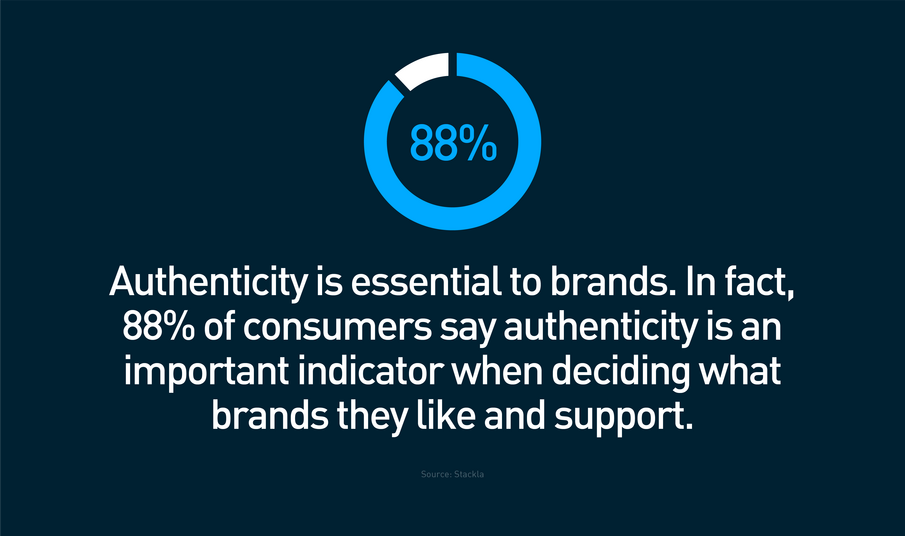
Customer trust and loyalty. Authentic brands are consistent ones, they show up the same way across contexts, which signals reliability. Brand management is the operational infrastructure behind that reliability.
Market resilience. Brands with strong equity recover faster from crises, weather competitive pressure more effectively, and retain customer loyalty through product or service disruptions. This resilience isn't accidental, it's the result of years of consistent brand management.
Competitive differentiation. In categories where products are functionally similar, the brand is often the primary differentiator. Brand management builds and maintains that differentiation over time, making it harder for competitors to replicate and harder for customers to switch away from.
How AI is changing brand management in 2026
AI is the most significant shift in brand management since the rise of digital channels. It creates new capabilities and new risks simultaneously.
On the capability side: AI-generated content, images, and video have made it possible for teams to produce brand content faster and at greater scale than ever before. AI search and discovery tools are reshaping how customers first encounter brands, increasingly through AI-generated answers rather than direct search results. For brand managers, this means the brief no longer ends at human-facing content.
On the risk side: AI tools produce outputs that are wrong, off-brand, and sometimes legally problematic if they're not governed. A model that hasn't been given your brand voice will generate content in whatever voice it defaults to. A designer using an AI image tool without clear visual guidelines will produce assets that don't look like the brand.
According to Bynder's State of DAM Report 2026, 97% of brands report that AI has impacted their content operations. This is no longer a future-state consideration, it's the current operating environment.
The immediate practical response is governance: document the rules, define which tools are approved, establish what requires human review before publication. AI guidelines belong in your brand guidelines alongside logo rules and color palettes.
But the more important shift is conceptual. Historically, brand guidelines were written for humans, designers, copywriters, agencies who would read them and apply judgment. The emerging discipline is writing brand guidelines for machines. When your brand rules are specific, structured, and machine-readable, AI tools can be trained on them, outputs can be checked against them automatically, and compliance can be enforced at the point of creation rather than caught in review.
This reframes brand guidelines from a reference document into operational infrastructure, the policy layer that governs how AI produces brand content at scale. The organizations moving fastest here aren't just writing better guidelines; they're deploying AI agents that use those guidelines as their source of truth, flagging off-brand outputs before they reach a human reviewer.
For brand managers, this represents a genuine expansion of the function. The job is no longer just defining how the brand should look and sound, it's building the system that enforces it automatically, across every tool, team, and touchpoint, without requiring a human to check every asset.
With Bynder, the brand guidelines and asset governance layer sits in one place, creating the structured foundation that makes this kind of AI-powered enforcement possible. The brands that invest in that foundation now will be the ones that can scale content without scaling risk.
Brand management tools: how DAM supports brand management
Brand management requires technology to work at scale. The operational core of modern brand management is a digital asset management (DAM) platform.
A DAM system serves as the single source of truth for approved brand assets, logos, imagery, templates, videos, guidelines, and the metadata that governs how they're used. When a designer in London, a distributor in Tokyo, and an agency in New York all need the current brand logo, a DAM ensures they all get the same version, with the same usage rules attached.
The operational benefits are direct: fewer version control failures, faster content production, less time spent tracking down approved assets, and clearer audit trails for compliance. But the strategic benefit is what makes DAM central to brand management rather than just useful: it connects your brand standards to the actual content production workflow.
Bynder's digital asset management platform centralizes approved assets, dynamic brand guidelines, and role-based access controls in one place, so the right people have access to the right assets with the right permissions. This shifts brand governance from a reactive, policing function to a proactive, enabling one.
With Bynder's CX for User Community product, organizations can also create dedicated brand portals for different audiences, giving partners, distributors, and regional teams curated access to the assets and guidelines relevant to their role, without opening the entire asset library.
For brands managing multiple markets, languages, or product lines, this kind of role-based governance is the difference between a brand that scales and one that fragments. The tools make brand consistency operationally achievable rather than aspirationally aspirational.
Frequently asked questions
What is the definition of brand management?
Brand management is the strategic discipline of building, measuring, and protecting a brand's value over time. It operates across three levels: strategy (positioning and differentiation), identity (visual and verbal standards), and governance (the systems that ensure both hold across teams and markets).
What is the difference between brand management and marketing?
Brand management defines and maintains the brand system, what the brand looks like, sounds like, and stands for. Marketing uses that system to achieve commercial outcomes: generating awareness, driving leads, and converting customers. Marketing activates the brand; brand management defines and governs it. In practice, marketing teams often take on brand ownership in early-stage companies before a dedicated brand function exists.
What is the difference between brand management and branding?
Branding is the act of creating a brand identity: the logo, color palette, tone of voice, and visual system. It's largely a creative exercise with a defined deliverable. Brand management is the ongoing discipline that comes after, maintaining, evolving, and protecting the brand those assets represent. Branding is a project; brand management is a function.
What is brand equity and why does it matter?
Brand equity is the commercial value a brand accrues through recognition, trust, and positive association, independently of any individual product. High brand equity allows companies to charge premium prices, enter new categories more easily, and recover from crises faster. Building brand equity is the strategic goal that most tactical brand management work ultimately serves.
What are the key principles of brand management?
The core principles are: brand positioning (what the brand stands for and how it's different), brand identity (the visual and verbal elements that express it), brand consistency (applying those elements reliably across all channels), brand equity (the cumulative commercial value the brand builds over time), brand awareness (visibility in the market), brand loyalty (emotional and behavioral attachment from customers), and brand reputation (active monitoring and management of how the brand is perceived).
What does a brand manager do?
A brand manager defines and documents brand standards, governs asset creation and distribution, audits the brand across channels for inconsistency, onboards teams and agencies to brand guidelines, manages rebrands when strategy changes, and tracks brand health metrics over time. The role combines creative judgment with operational rigor and cross-functional relationship management.
How does AI affect brand management?
AI has expanded what teams can produce while introducing new governance risks. Without proper guidelines, AI tools generate outputs that are off-brand, inaccurate, or legally problematic. According to Bynder's State of DAM Report 2026, 97% of brands say AI has already impacted their content operations. The emerging best practice goes beyond documenting rules for humans, it's writing brand guidelines that are specific and structured enough for AI tools to be trained on, so compliance can be enforced at the point of creation rather than caught in review.
What software do brand managers use?
Brand managers typically use a digital asset management (DAM) platform as their operational core, centralizing approved assets, enforcing version control, and connecting brand guidelines to the actual workflow. The best DAM platforms, include solutions to manage brand guidelines, digital template editors for self-serve content creation, creative collaboration tools, downstream delivery for content activation, and brand health monitoring for tracking content use, along with awareness and sentiment in the market.
Manage your brand consistently, at scale, with Bynder
Bynder's digital asset management platform gives marketing and brand teams a single place to govern and govern content to ensure brand authenticity and brand identity across teams, markets, and channels, without slowing down content production.
Dynamic brand guidelines keep every team on the same page. DAM keeps every asset findable, approved, trusted, and properly governed. Role-based access ensures the right people have the right permissions, whether they're internal designers, external agencies, or regional distributors.
If your brand is growing faster than your ability to control how it's applied, that gap is worth closing.